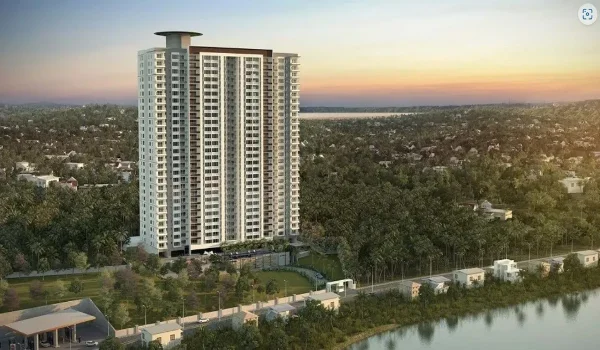
Questions to Ask the Builder Before Booking

Published On: 25 June 2026
Booking a flat is one of the largest financial commitments most families ever make, and the difference between a smooth purchase and a painful one usually comes down to the questions you ask before you pay the booking amount. A confident, well-run developer will answer every one of them in writing; evasiveness on any of them is a warning sign. This checklist organises the questions into themes that mirror how a purchase actually unfolds, from legal status and approvals through cost, payment and possession, to specifications and exit terms. For each, you will find why it matters and what a reassuring answer looks like, illustrated where useful by a RERA-approved project such as Godrej Brooklyn Avenue by Godrej Properties in Kukatpally, west Hyderabad. Treat it as a script for your site visit and a paper trail for everything you are promised.
Legal Status and Approvals — Get These in Writing First
Everything else is irrelevant if the legal foundation is shaky, so this is where every conversation should begin. Ask for the RERA registration number and verify it yourself on the Telangana RERA portal rather than taking a screenshot at face value; a genuine project will share the number freely. Godrej Brooklyn Avenue, for instance, is registered under TS-RERA No. P02200010981 with booking open, which a buyer can independently confirm on the official portal. Beyond RERA, ask to see the clear land title and the chain of ownership, the approved building plan or sanction, and the statutory NOCs covering fire, environment, water and the relevant local authority. A reassuring answer is a folder of approvals you can read and copy, not a verbal assurance that everything is "in process".
Possession Date and the Penalty for Delay
Ask for the committed possession date as written in the agreement, not the optimistic launch-day estimate, and ask specifically what compensation the builder pays if that date slips. This matters because delays are the single most common grievance in Indian real estate, and a RERA-registered agreement should carry a defined delay-penalty clause that protects you. Godrej Brooklyn Avenue, launched 25 May 2026, carries a stated possession timeline of June 2031, which gives you a concrete date to hold the builder to. A good answer names a firm handover quarter, references the penalty payable per month of delay, and explains the grace period in plain language.
Carpet Area, Super Built-Up and the Loading Factor
You pay for super built-up area but you live in carpet area, so always ask for both numbers and the loading factor between them. The loading factor is the share of common space (lobbies, lifts, corridors) added on top of your usable floor, and a high loading factor quietly shrinks what you actually get. RERA now mandates that carpet area be disclosed, so a trustworthy developer states it without hesitation. For Godrej Brooklyn Avenue the configurations span 1,588 to 3,261 sq.ft across 3 BHK and 4 BHK with servant options, and the sales team should be able to map each unit's carpet area against its super built-up area. If you want to understand this distinction before your visit, read our explainer on carpet area versus built-up versus super built-up area.
The Full Cost Sheet — No Surprises Later
The headline price is rarely the price you pay, so insist on a complete, itemised cost sheet before booking. Ask for the base rate per square foot, the floor-rise premium, amenity and clubhouse charges, parking cost, the applicable GST, plus the stamp duty and registration that fall on you at the sub-registrar's office. As an under-construction project, Godrej Brooklyn Avenue attracts 5% GST until the occupancy certificate is issued; its base rate is around Rs 12,500 per sq.ft, with all-in pricing of roughly Rs 2.10 to 4.40 Cr depending on configuration. The table below is the form your questions should take, and a confident builder fills every "good answer" cell without flinching. For the full project breakdown, see our detailed cost sheet.
| Question to ask | Why it matters | A good answer looks like |
| What is the base rate per sq.ft? | It anchors the whole quote and lets you compare projects fairly | A clear figure, e.g. around Rs 12,500/sq.ft, stated in writing |
| What are the floor-rise and amenity charges? | These add-ons can move the final price by lakhs | A transparent per-floor rate and a fixed amenity charge, itemised |
| Is parking included or extra? | Parking is often billed separately and can be disputed later | Allotted parking confirmed in the cost sheet and the agreement |
| What GST applies? | Under-construction homes carry GST that buyers sometimes miss | 5% GST until the occupancy certificate, then nil, explained clearly |
| Are stamp duty and registration extra? | They are statutory costs paid by you, not the builder | Stated as buyer's cost with an honest estimate of the percentage |
| Are there any other charges? | Hidden "miscellaneous" fees surface at the demand-letter stage | A written confirmation that the cost sheet is final and complete |
Payment Plan and EOI Refundability
Ask exactly how and when you have to pay. A construction-linked plan, where instalments fall due as the building rises, protects your money far better than a front-loaded plan that demands most of the cost up front. Clarify whether the Expression of Interest amount is refundable and on what terms; at Godrej Brooklyn Avenue the EOI is Rs 5 to 6 Lakh and is refundable, which is the kind of low-risk entry a buyer should look for. A reassuring answer ties payments to construction milestones, states the EOI refund policy in writing, and explains what happens to your booking if a home loan is declined. For the staged sequence of a purchase, our guide on how to book an apartment step by step walks through each stage.
Specifications, Fittings and Brands
A glossy show flat is not a contract, so ask for the written specification sheet listing flooring, kitchen, bathroom fittings, electricals, doors, windows and paint, with brand names or grades wherever possible. This matters because vague terms like "premium fittings" leave the builder free to substitute cheaper material at handover. A good answer is a detailed spec annexed to the agreement, naming brands or comparable equivalents, with a clear statement on what the show apartment represents versus what is standard. Insist that the specification you are shown is the specification that goes into the sale agreement.
Maintenance, Corpus and Who Runs the Community
Once you move in, the recurring cost of living in the community is the maintenance charge, so ask for the rate per square foot, what it covers, the size of the one-time corpus or sinking fund, and who manages the estate during the early years before the residents' association takes over. This matters because a thin corpus or an absent facility manager leads to neglected lifts, generators and landscaping within a few years. A reassuring answer gives a defined per-square-foot rate, a healthy corpus figure, and a professional facility-management arrangement. Our breakdown of maintenance charges explains how to judge whether the quoted figure is fair for a 75,000 sq.ft clubhouse and 50-plus amenities.
Parking, Amenity Timeline and Exit Terms
- Parking allotment — Confirm how many car parks come with your unit, whether they are covered, and how visitor and EV parking are handled; a good answer fixes this in the agreement rather than promising it verbally.
- Amenity delivery timeline — Ask which of the 50-plus amenities and the clubhouse are ready at possession and which arrive in later phases, so you are not buying facilities that exist only on the brochure.
- Cancellation and exit terms — Ask precisely what is forfeited if you cancel, the timeline for any refund, and whether the EOI or booking amount is returned; a fair builder spells out the forfeiture clause clearly before you commit.
- Transfer and resale rules — Check whether you can transfer the allotment before possession and what fee applies, which matters for investors and for anyone whose plans may change.
- Connectivity and infrastructure — Verify nearby infrastructure such as the JNTU College Metro station and Remedy Hospitals around 2.9 km away, since location underpins both daily life and resale value.
How to Use This Checklist on Your Visit
Carry these questions printed, and ask the sales team to put the answers in writing or in the agreement. The pattern to watch for is consistency: a developer whose cost sheet, specification, possession date and RERA number all line up across documents is one you can trust, while contradictions between the brochure, the website and the agreement are the clearest red flag of all. A credible developer with a delivery record, such as Godrej Properties, generally reduces the risk that promises made at booking quietly evaporate by possession. Booking is open at Godrej Brooklyn Avenue with a refundable EOI, RERA approval in place and a stated June 2031 possession, which is precisely the combination of transparency this checklist is designed to surface, so use it to hold every project you consider to the same standard.
Frequently Asked Questions
1. What is the single most important question to ask before booking a flat?
Ask for the RERA registration number and verify it yourself on the official Telangana RERA portal. RERA registration confirms the project is legally cleared and gives you protection on possession and quality. Godrej Brooklyn Avenue is registered under TS-RERA No. P02200010981 with booking open, which any buyer can independently check before paying a rupee.
2. Why should I ask about carpet area instead of just the price?
Because you pay for super built-up area but live in carpet area, and the gap between them, the loading factor, decides how much usable space you actually get. RERA requires carpet area to be disclosed, so ask for both figures and the loading factor. A trustworthy developer states them clearly and maps each unit's carpet area against its super built-up area.
3. What hidden charges should I ask the builder to disclose?
Ask for an itemised cost sheet covering the base rate, floor-rise premium, amenity and clubhouse charges, parking, GST, and the stamp duty and registration you pay at the sub-registrar. For under-construction homes such as Godrej Brooklyn Avenue, a 5% GST applies until the occupancy certificate. Insist on written confirmation that the cost sheet is final and complete.
4. Is the EOI or booking amount refundable if I change my mind?
It depends on the developer, so ask before you pay. At Godrej Brooklyn Avenue the Expression of Interest of Rs 5 to 6 Lakh is refundable, which keeps your entry low-risk. For any project, get the refund policy and the cancellation forfeiture terms in writing, and clarify what happens if your home loan is not approved.
5. What should the builder commit to on possession and delay?
Ask for the possession date written into the agreement and the penalty payable if it slips. A RERA-registered agreement should carry a defined delay-compensation clause. Godrej Brooklyn Avenue states a possession timeline of June 2031 against its 25 May 2026 launch, giving buyers a concrete date to hold the developer to.
6. How do I judge whether the maintenance charge is reasonable?
Ask for the per square foot rate, what it covers, the size of the corpus or sinking fund, and who manages the estate after handover. A healthy corpus and professional facility management keep lifts, generators and landscaping in good shape. For a low-density community like Godrej Brooklyn Avenue with a 75,000 sq.ft clubhouse and 50-plus amenities, the charge should fund genuine upkeep rather than just collection.
Godrej Brooklyn Avenue Blog