CIBIL Score for Home Loans - Minimum & How to Improve
Published On: 25 June 2026
Your CIBIL score is the single number that decides whether a bank says yes to your home loan, and at what interest rate. For a buyer eyeing a 3 BHK at Godrej Brooklyn Avenue in Kukatpally — where homes start near ₹2.10 Cr and loans often run to ₹1.5-2 Cr — even a small difference in your score can mean lakhs of rupees in interest over a 20-year tenure. This guide explains the minimum CIBIL score lenders look for in 2026, how the score is built, how it maps to your interest rate, and a step-by-step plan to lift it before you apply.
What Score Do You Actually Need?
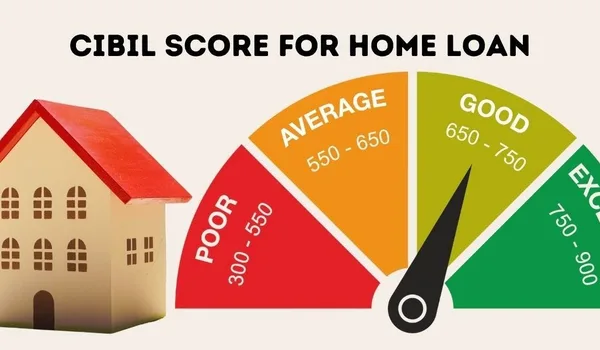
The CIBIL score runs from 300 to 900. As a rule of thumb (as of 2026, verify with your lender, individual bank cut-offs differ): most banks treat 650 as the practical minimum for a home loan, while 750 and above unlocks the best interest rates and fastest approvals. Below 650, you may still get sanctioned, but expect a higher rate, a lower loan-to-value ratio, or a request for a co-applicant.
| Score band | What it means for your loan |
| 800-900 | Excellent — best rates, top loan-to-value, quickest approval |
| 750-799 | Very good — competitive rates, smooth sanction |
| 650-749 | Fair — approval likely but at a slightly higher rate |
| 550-649 | Weak — limited offers, higher rate, may need a co-applicant |
| Below 550 | Poor — most banks decline; repair the score first |
How the Score Is Built
CIBIL weights five broad factors. Payment history carries the most weight — missing or delaying EMIs and card bills hurts the most. Credit utilisation (how much of your card limit you use) matters next; keeping it under 30% helps. Credit age and mix reward a long, varied track record across secured and unsecured loans. New credit and hard enquiries drag the score if you apply to many lenders in a short window. Understanding these levers tells you exactly where to act.
Why a Higher Score Saves Real Money
Consider a ₹2 Cr loan over 20 years at the 2026 home loan rate of around 7.75% (verify with your bank). The EMI works out to roughly ₹1,64,190. If a weaker score pushes your rate up by even 0.40%, your EMI rises by several thousand rupees a month and you pay lakhs more across the tenure. That is why it pays to walk into the bank with a 750-plus score. To see how the EMI itself is structured at this project's price band, read our home loan and EMI guide for Godrej Brooklyn Avenue.
How to Improve Your CIBIL Score — A Practical Plan
- Pay every EMI and card bill on time — set auto-debit so a single missed date never dents your history.
- Keep card utilisation below 30% — if you regularly use most of your limit, ask for a limit increase or spread spends across cards.
- Clear old defaults and settle dues — a "settled" tag hurts; aim for "closed" by paying the full outstanding.
- Avoid multiple loan enquiries — each hard enquiry trims your score, so don't apply to several banks at once.
- Keep old cards active — closing your oldest card shortens your credit age; keep it running with a small recurring spend.
- Check your report for errors — pull your free annual CIBIL report and dispute any wrong entry; corrections can lift the score within weeks.
A weak score is rarely permanent. Disciplined repayment over six to twelve months can move a 650 towards 750. If you are planning to book at Godrej Brooklyn Avenue, start the clean-up before you apply rather than after. It is also worth budgeting for the up-front costs the loan does not cover — read our note on stamp duty and registration charges in Hyderabad so your down-payment plan is realistic.
Frequently Asked Questions
1. What is the minimum CIBIL score for a home loan?
Most banks treat around 650 as the practical minimum for a home loan, with 750 and above unlocking the best interest rates and fastest approvals (as of 2026, verify with your lender). Below 650 you may still be sanctioned but at a higher rate, lower loan-to-value, or with a co-applicant.
2. Does my CIBIL score affect my home loan interest rate?
Yes. Many lenders use risk-based pricing, so a 750-plus score typically gets the lowest advertised rate while a weaker score is charged a premium. On a large loan for a home like a 3 BHK at Godrej Brooklyn Avenue, even a 0.40% difference adds up to lakhs over the tenure.
3. How long does it take to improve a CIBIL score?
With consistent on-time payments and lower card utilisation, you can usually see meaningful improvement in six to twelve months. Correcting an error on your report can lift the score faster, sometimes within a few weeks of the dispute being resolved.
4. Will checking my own CIBIL score lower it?
No. Checking your own score is a "soft enquiry" and does not affect it. Only "hard enquiries" — when a lender pulls your report after you apply for credit — can trim the score, which is why you should avoid applying to many banks at once.
5. Can I get a home loan with no credit history?
It is harder but possible. With no history, lenders rely more on your income proof, employment stability and down payment. Adding a co-applicant with a good score, or first building a track record with a small card used responsibly, improves your chances and your rate.
Godrej Brooklyn Avenue Blog