Documents & Legal Checklist to Buy a Flat in Hyderabad
Published On: 25 June 2026
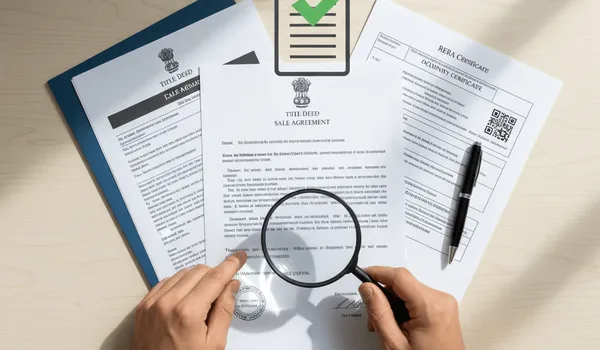
Buying a flat is one of the largest financial commitments most families make, and in Hyderabad the difference between a clean purchase and a troubled one almost always comes down to paperwork. A flat may look perfect on a site visit, but it is the documents behind it — the title, the approvals, the registrations — that decide whether you actually own a marketable, dispute-free asset. This checklist walks through every document and legal verification a buyer should complete before paying a token amount or signing an agreement in Hyderabad and the wider Telangana region. The steps below apply equally to a resale flat and a new launch such as Godrej Brooklyn Avenue in Kukatpally, west Hyderabad, with the project-specific approvals flagged where they matter. As of 2026, always cross-check the live status of any registration on the relevant official portal before you commit.
A) Title & Ownership Documents
The first job is to confirm that the seller genuinely owns the property and has the unbroken right to sell it. Ask for the mother deed (parent deed) and the full chain of title — the sequence of registered link deeds that traces ownership back through every previous transfer. Any gap in that chain is a warning sign. Next, examine the latest registered sale deed in the current owner's name, which is the primary proof of ownership. Then obtain the Encumbrance Certificate (EC) from the Sub-Registrar for a period of 13 to 30 years; a clean EC shows no outstanding mortgage, lien or court attachment against the property. Finally, collect the recent property tax receipts, which confirm the unit is assessed and that civic dues are clear. Reading the registration mechanics alongside this helps — our guide to the property registration process in Telangana explains how these deeds are recorded.
B) Project & Builder Documents (New Flat)
For a flat in a new or under-construction project, the developer's approvals carry the same weight as the title. Insist on the RERA registration certificate and verify the number yourself on the TS-RERA portal — as of 2026, a genuine registration will display the project name, promoter and approved details online. Ask for the approved building plan / sanction and the layout and land-use approval from HMDA or the relevant local body, plus the commencement permissions and the builder's own land title showing the developer holds clear rights over the land. For an under-construction unit, you will also sign and register the Agreement of Sale (builder-buyer agreement), and you should hold the allotment letter and a clear payment / construction-linked plan setting out exactly what is due at each milestone. A registered agreement, rather than an unregistered one, gives you far stronger legal standing.
C) Statutory & Handover Documents
Some documents only become relevant as the project nears completion. At possession, the developer must hand over the Occupancy Certificate (OC), which certifies that the building was constructed per the approved plan and is fit to live in — never take final handover without it. Depending on the project, you should also see the relevant NOCs (fire safety, environment clearance where applicable). For an under-construction purchase, the developer raises GST invoices on each instalment, and GST remains applicable until the OC is issued, after which a ready unit is exempt. Keeping these invoices is important both for your records and for any future resale.
D) Buyer KYC & Home Loan Documents
Alongside the seller's papers, you will need your own documents ready, especially if you are financing the purchase. The standard set is your PAN card, Aadhaar, recent passport-size photographs, income proof (salary slips or ITRs), and bank statements for the last six months. If you are taking a home loan, the lender will issue a loan sanction letter after appraising both your profile and the property's legal title — banks effectively run their own due diligence, which is a useful second check. When you plan the overall outlay, factor in the one-time charges too; our breakdown of stamp duty and registration charges in Hyderabad sets out those costs in detail.
The Document Checklist at a Glance
| Document | Why It Matters | Verify Where |
| Mother deed & chain of title | Proves unbroken ownership history | Sub-Registrar Office records |
| Latest registered sale deed | Primary proof of current ownership | Original with seller; SRO copy |
| Encumbrance Certificate (EC) | Confirms no mortgage, lien or attachment | Telangana Registration / Sub-Registrar |
| Property tax receipts | Shows civic dues are clear | GHMC / local municipal body |
| RERA registration certificate | Confirms the project is legally registered | TS-RERA portal (verify the number) |
| Approved building plan / sanction | Built area must match approved plan | HMDA / sanctioning authority |
| Layout & land-use approval | Confirms permitted residential use | HMDA / local body |
| Registered Agreement of Sale | Locks in price, area & payment plan | Sub-Registrar (registered copy) |
| Occupancy Certificate (OC) | Certifies the building is fit to occupy | Developer at possession |
| GST invoices (under-construction) | Tax record until OC is issued | Developer / payment receipts |
| Buyer KYC (PAN, Aadhaar, income proof) | Required for registration & loan | Your own records / bank |
Red Flags to Watch For
Most property disputes can be spotted in the documents long before they become a courtroom problem. Walk away, or pause and seek legal advice, if you encounter any of the following:
- A broken title chain — a missing link deed or an unexplained gap in ownership history.
- An EC showing an active mortgage, lien or court attachment that the seller has not cleared.
- A project that is not RERA-registered, or whose RERA number you cannot verify on the portal.
- A mismatch between the approved plan and the built area — extra floors, altered carpet area or unapproved changes.
- An unregistered agreement, vague payment schedule, or a refusal to share originals for verification.
What This Means at Godrej Brooklyn Avenue
Godrej Brooklyn Avenue is developed by Godrej Properties in Kukatpally, west Hyderabad, and is RERA APPROVED under Telangana No. P02200010981 with bookings currently open. That means the most critical project-level check — RERA registration — is already satisfied, and you can confirm the registration details on the TS-RERA portal. Because it is an under-construction development with possession scheduled for June 2031, the Occupancy Certificate will be issued at possession and GST applies on instalments until then. Even with the RERA box ticked, a diligent buyer should still ask the sales team for the approved building plan and ensure the registered Agreement of Sale reflects the agreed price, the 3 or 4 BHK configuration, the carpet area and the construction-linked payment schedule. The homes are priced between roughly ₹2.10 Cr and ₹4.40 Cr, so the few hours spent verifying paperwork are a small investment against the value at stake. If you want the procedural side of a fresh booking, our step-by-step note on how to book an apartment step by step complements this legal checklist.
Frequently Asked Questions about Documents to Buy a Flat
1. What are the most important documents to check before buying a flat in Hyderabad?
The essentials are the mother deed and chain of title, the latest registered sale deed, the Encumbrance Certificate covering 13–30 years, property tax receipts, and — for a new project — the RERA registration certificate, the approved building plan and the registered Agreement of Sale. Together these confirm clear ownership, no encumbrances and a legally sanctioned project.
2. What is an Encumbrance Certificate and why does it matter?
An Encumbrance Certificate (EC) issued by the Sub-Registrar lists all registered transactions on a property over a chosen period. A clean EC shows no outstanding mortgage, lien or court attachment, which means the seller can give you a clear title. If the EC reveals an active loan, that charge must be cleared and reflected before you proceed.
3. How do I verify a project's RERA registration?
Ask the developer for the RERA registration number, then, as of 2026, search for it on the official TS-RERA portal. A genuine registration displays the project name, the promoter and the approved details. Godrej Brooklyn Avenue is RERA approved under Telangana No. P02200010981, so this check is already satisfied for that project.
4. Do I need an Occupancy Certificate for an under-construction flat?
The Occupancy Certificate (OC) is issued only when construction is complete and the building is fit to occupy, so for an under-construction flat you will receive it at possession. At Godrej Brooklyn Avenue, with possession targeted for June 2031, the OC comes at handover, and GST applies on instalments until it is issued. Never take final possession without the OC.
5. Which KYC documents does a home-loan buyer need?
You will typically need your PAN card, Aadhaar, passport-size photographs, income proof such as salary slips or income-tax returns, and bank statements for the past six months. The lender appraises both your profile and the property's title before issuing a loan sanction letter, which doubles as an independent check on the flat's legal standing.
Godrej Brooklyn Avenue Blog