Home Loan Balance Transfer - When It Saves Money
Published On: 25 June 2026
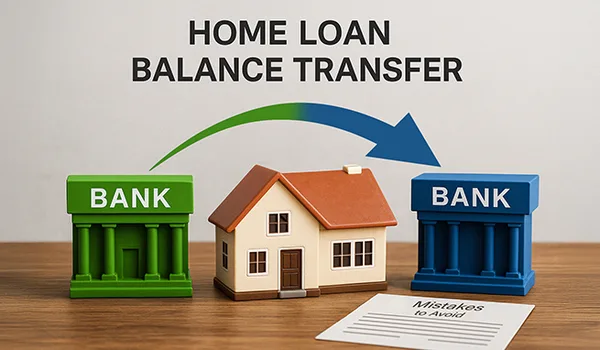
A home loan balance transfer is the process of moving your outstanding loan from your current bank to a new lender that offers a lower interest rate. The new lender pays off your existing balance and you continue your repayment with them on cheaper terms. Done at the right moment, it can shave several lakhs off the total interest you pay across a long tenure. Done at the wrong moment, the fees and a reset clock can quietly cancel out the gain. This guide walks through exactly when it saves money, what the move costs, and a worked example you can adapt to your own numbers. For context, a buyer who secures an apartment at Godrej Brooklyn Avenue by Godrej Properties in Kukatpally, west Hyderabad - priced Rs 2.10-4.40 Cr with possession in June 2031 - may well revisit a balance transfer a year or two after the loan is disbursed, once rates have moved.
What a Home Loan Balance Transfer Actually Is
Think of it as refinancing. You are not taking a fresh loan against your salary - you are asking a competing lender to buy out the debt you already carry. The new bank disburses an amount equal to your current outstanding principal directly to your old bank, the old loan closes, and a fresh loan agreement begins with the new lender at the new rate. Your property's mortgage (the lien) shifts from the old bank to the new one. Everything else - the asset, the borrower, the broad repayment structure - stays the same. The only thing you are chasing is a lower rate of interest, and sometimes a top-up amount on the side.
When a Balance Transfer Saves Money
A transfer is worthwhile only when two conditions hold together. First, the rate gap should be at least 0.5% (50 basis points) between your current rate and the new offer. A smaller gap rarely covers the switching costs. Second, you should have substantial tenure left - ideally the early-to-middle years of the loan, when the interest component of each EMI is still large. In the back half of a home loan you are mostly repaying principal, so a lower rate has little left to bite into and the exercise stops making sense.
As a reference point, a typical home loan in 2026 runs around 7.75% p.a. on a floating basis (as of 2026, verify with your bank). On a Rs 2 Cr loan at 7.75%, the EMI works out to roughly Rs 1,64,190 over 20 years, or about Rs 1,43,282 over 30 years. If your existing loan is sitting at 8.5% while fresh offers are at 7.75%, that 0.75% gap is exactly the kind of spread that justifies a look. One more piece of good news: under RBI norms, floating-rate home loans carry no prepayment or foreclosure penalty, so your old bank cannot charge you to leave.
Worked Example - Rs 1.5 Cr Outstanding
Suppose you bought a home with a Rs 2 Cr loan a few years ago, your outstanding principal is now Rs 1.5 Cr, you have 18 years left, and you are paying 8.50%. A new lender offers 7.75%. Here is how the numbers stack up (illustrative, rounded, as of 2026):
| Item | Current loan (8.50%) | After transfer (7.75%) |
| Outstanding principal | Rs 1,50,00,000 | Rs 1,50,00,000 |
| Remaining tenure | 18 years (216 months) | 18 years (216 months) |
| Monthly EMI (approx.) | Rs 1,30,650 | Rs 1,23,400 |
| EMI saved per month | — | Rs 7,250 |
| Total interest over 18 yrs (approx.) | Rs 1,32,20,000 | Rs 1,16,55,000 |
| Gross interest saved | — | Rs 15,65,000 |
| Transfer cost (processing + legal + MODT) | — | Rs 95,000 |
| Net benefit (keeping same tenure) | — | ~Rs 14,70,000 |
The headline EMI relief is about Rs 7,250 a month, but the real prize is the interest saved across the full remaining tenure - roughly Rs 15.65 lakh gross, or about Rs 14.7 lakh after the one-time switching cost. The single most important discipline here is to keep the remaining tenure the same (18 years), not let the new lender quietly stretch it back to 20 years to make the EMI look even smaller. Resetting the clock is the classic way a transfer "saves" on EMI while costing you more in lifetime interest.
The Costs You Pay to Switch
- Processing fee - charged by the new lender, typically 0.25%-0.50% of the loan, often capped or waived during offers.
- Legal and valuation charges - the new bank inspects your title documents and re-values the property; usually a few thousand rupees.
- MODT / stamp duty - where applicable, the Memorandum of Deposit of Title Deed and associated stamp charges are levied again on the fresh mortgage. In Telangana this can run into a meaningful sum on a large loan, so confirm the exact figure for Hyderabad before you commit.
- Foreclosure charges on the old loan - zero for floating-rate home loans, but fixed-rate loans can attract a penalty, so check your loan type first.
How to Compute Your Net Savings
The arithmetic is simple. Calculate total interest payable on your current loan for the remaining tenure, then calculate total interest at the new rate for the same tenure. The difference is your gross saving. Subtract every switching cost listed above - processing, legal, valuation and MODT/stamp - and what remains is your net benefit. If that figure is comfortably positive and you intend to hold the loan for several more years, the transfer pays. Our home loan and EMI guide sets out the EMI formula and tenure tables you can use to run these figures yourself.
The Step-by-Step Process
- 1. Compare offers - shortlist lenders quoting at least 0.5% below your current rate; check the all-in cost, not just the headline.
- 2. Request a foreclosure letter - ask your existing bank for a foreclosure / outstanding statement showing the exact principal due.
- 3. Submit documents - identity and income proof, the original loan agreement, property papers, repayment track record and the foreclosure letter go to the new lender.
- 4. Approval and sanction - the new bank verifies title, runs your CIBIL, and issues a sanction letter. A score of 750+ typically unlocks the best advertised rates.
- 5. NOC and disbursal - the new lender pays the old bank, which issues a No Objection Certificate (NOC) and releases your property documents.
- 6. Lien transfer - the mortgage is registered in favour of the new lender and your fresh EMI cycle begins.
The Top-Up Loan Option
Many borrowers pair a balance transfer with a top-up loan - an additional amount sanctioned over and above the transferred principal, at the same low home-loan rate. It is a cheaper way to fund renovation, registration costs or other needs than a personal loan, because it rides on the secured home-loan rate. Just remember a top-up increases your total debt and EMI, so borrow only what you genuinely need and keep the home-loan portion clearly separated in your own planning.
Honest Pros and Cons
| Pros | Cons |
| Lower interest rate cuts lifetime interest | One-time switching costs (processing, legal, MODT) |
| No foreclosure penalty on floating loans | Fresh documentation and paperwork effort |
| Option to add a low-cost top-up loan | Risk of tenure being silently reset, raising total interest |
| Chance to move to a more responsive lender | "Teaser" intro rates that climb after a few months |
| EMI relief eases monthly cash flow | Small rate gaps rarely cover the costs |
Who Should - and Who Should NOT - Transfer
You should consider a transfer if: your current rate is 0.5% or more above fresh market offers, you still have a long tenure left (the early or middle years), your CIBIL score is 750+ so you qualify for the best rates, and your loan is on a floating rate with no foreclosure penalty. A buyer at Godrej Brooklyn Avenue payment plan who takes a loan now and watches rates soften over the next couple of years is a textbook candidate.
You should NOT transfer if: the rate gap is under 0.5%, you are in the final years of the loan with little interest left to save, the switching costs exceed the interest you would save, or you are being lured by a teaser rate that resets upward soon. In these cases, simply negotiating a rate reduction with your existing bank - or making a part-prepayment - often beats a full transfer. To check the full purchase outlay before deciding how much to borrow, review the complete cost sheet.
Frequently Asked Questions about Home Loan Balance Transfer
1. When does a home loan balance transfer save money?
It saves money when two conditions hold together: the rate gap between your current loan and the new offer is at least 0.5%, and you still have substantial tenure remaining - ideally the early-to-middle years when the interest portion of each EMI is largest. With a typical rate around 7.75% p.a. in 2026, moving from 8.5% to 7.75% on a large, long-dated loan can save several lakhs in interest after costs (as of 2026, verify with your bank).
2. Is there a penalty for transferring a home loan?
For floating-rate home loans there is no prepayment or foreclosure penalty, so your existing bank cannot charge you to exit. Fixed-rate loans may attract a foreclosure charge, so check your loan type first. You will, however, pay one-time costs to the new lender - processing fee, legal and valuation charges, and MODT/stamp duty where applicable (as of 2026, verify with your bank).
3. What documents are needed for a balance transfer?
You will need identity and income proof, your existing loan agreement, the property title documents, your repayment track record, and a foreclosure or outstanding statement from your current bank. After approval, the old bank issues a No Objection Certificate (NOC) and releases the documents, and the mortgage lien is registered in favour of the new lender.
4. What CIBIL score do I need for the best transfer rate?
A CIBIL score of 750 or above typically unlocks the lowest advertised home-loan rates. Lenders price risk off your score, so a strong repayment history on the existing loan also helps. If your score is below 750, work on it for a few months before applying, as a better rate makes a larger difference over a long tenure (as of 2026, verify with your bank).
5. Should I keep the same tenure when I transfer?
Yes - keeping the remaining tenure unchanged is the key to maximising savings. Some lenders stretch the tenure back out to lower the EMI, which makes the monthly figure look attractive but increases total interest paid. Hold the tenure steady and take the benefit as a lower EMI on the same end date, so the full interest saving lands in your pocket.
Godrej Brooklyn Avenue Blog