Under-Construction vs Ready-to-Move Flats — Which Is Better?
Published On: 25 June 2026
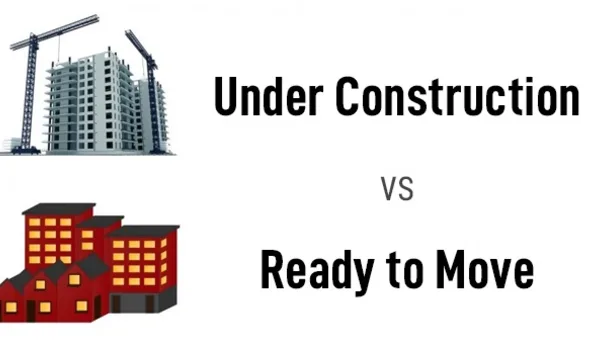
"Should I buy an under-construction flat or a ready-to-move one?" is the question that decides how much you pay, how much tax you add, and how much risk you carry. There is no universal winner — the right answer depends on whether you are buying to live in now or to grow capital over the next few years. This guide lays out the real differences in GST, pricing, RERA protection and payment flexibility, with a side-by-side table, and explains why a pre-launch entry at Godrej Brooklyn Avenue suits appreciation-focused buyers. Tax rates quoted are current as of 2026; verify the live GST and stamp-duty position with your CA before you transact.
The Two Choices, Defined
An under-construction (UC) flat is bought before the building is complete — anywhere from pre-launch to nearing handover — and is paid for in stages as work progresses. A ready-to-move (RTM) flat already has its Occupancy Certificate (OC); you can take possession and move in or rent out almost immediately. Godrej Brooklyn Avenue is an under-construction, new-launch project (RERA No. P02200010981, possession June 2031), so the UC economics below apply to it until the OC is issued.
The GST Difference — the Biggest Number
Tax is where UC and RTM diverge most sharply. An under-construction home attracts 5% GST (with no input-tax credit; because one-third of the value is treated as land, the effective burden is closer to ~3.33%). A ready-to-move home that already has its OC attracts 0% GST — the sale of a completed property is outside GST. Affordable housing is taxed at 1%, but that bracket does not apply to a premium project like this one. Layer in stamp duty and registration of roughly 6% in Hyderabad, and the total add-on over the base price typically lands around 7.5%–10.8% depending on whether the flat is UC or RTM. For the full acquisition build-up, see our cost sheet.
Side-by-Side Comparison
| Factor | Under-Construction | Ready-to-Move |
| GST | 5% (≈3.33% effective, no ITC) | 0% (OC issued) |
| Entry price | Lower — pre-launch/launch discount | Higher — completed premium |
| Payment | Staggered, construction-linked | Largely upfront / on loan |
| Appreciation runway | Higher — buy early, ride the build cycle | Lower — most gains already priced in |
| Possession | Wait (years) | Immediate |
| What you see | Show flat, plans, samples | The actual finished unit |
| Primary risk | Delay / execution risk | Older inventory, fewer choices |
| RERA cover | Strong — timelines & quality bound | Limited once OC issued |
Where Under-Construction Wins
The case for buying early rests on three things. First, price: launch and pre-launch pricing is usually the lowest you will see for that project, so the appreciation runway is longest. Second, cash flow: construction-linked payment plans spread the outflow over the build period instead of demanding the full amount upfront, which is far easier on a household budget. Third, choice: at launch you can pick the floor, facing and tower you want before the best units are gone. For Godrej Brooklyn Avenue the base rate starts around ₹12,500/sq.ft with prices from ₹2.10 Cr — see the payment plan for how those instalments are structured.
Where Ready-to-Move Wins
RTM removes uncertainty. You inspect the exact unit, there is no GST to add, and you can occupy or rent from day one — so a buyer who needs a home immediately or wants rental income now will often prefer it, even at a higher sticker price. The trade-offs are a smaller appreciation runway (most of the upside is already in the price), a larger upfront outflow, and a thinner choice of units in a building that may already be partly occupied.
RERA Protection — Stronger for UC
Many buyers assume ready-to-move is automatically "safer." On execution it often is — but on legal protection, an under-construction RERA-registered project is well covered. The developer must register the project, disclose timelines, hold buyer money in a dedicated account and deliver to the committed specification, with penalties for delay. Godrej Brooklyn Avenue carries Telangana RERA No. P02200010981, which means its plans, approvals and possession date are on the public record. The practical rule: a UC purchase from a credible, RERA-registered developer carries far less risk than from an unregistered or thinly-capitalised one.
Risk vs Reward — a Worked View
Picture a ₹2.10 Cr unit. As under-construction, you add ~5% GST and pay in instalments aligned to construction, while the price has years to appreciate before possession. As ready-to-move, you skip the GST but typically pay a higher base, fund most of it upfront, and inherit a shorter growth window. The UC buyer is paid for patience and execution risk; the RTM buyer pays a premium for certainty and immediacy. Neither is "wrong" — they are priced for different goals. Buyers weighing the brand and delivery record behind that risk can review the top reasons to invest in Godrej Brooklyn Avenue.
Who Should Buy Which
- Buy under-construction if — you are investing for appreciation, can wait for possession, want a staggered payment plan, and are buying from a credible RERA-registered developer
- Buy ready-to-move if — you need to occupy now, want rental income immediately, prefer to see the exact finished unit, and value certainty over the lowest entry price
- Either works if — your horizon is long and the developer is reputable; then the decision comes down to cash flow and how soon you need the keys
Frequently Asked Questions — UC vs RTM Flats
1. Is GST charged on ready-to-move flats?
No. A ready-to-move flat that already has its Occupancy Certificate attracts 0% GST, because the sale of a completed property falls outside GST. An under-construction flat attracts 5% GST (no input-tax credit; effectively ~3.33% after the one-third land deduction). Verify the live GST position as of 2026 with your CA.
2. Is under-construction property cheaper than ready-to-move?
Usually, yes, on entry price. Launch and pre-launch pricing is typically the lowest point in a project's price curve, which is why the appreciation runway is longest. Ready-to-move units cost more because the build is complete and much of the upside is already priced in — though they save the 5% GST and let you move in immediately.
3. Is buying an under-construction flat risky?
The main risk is construction delay or execution shortfall, which is why the developer matters most. A RERA-registered project from a credible, well-capitalised builder is well protected: timelines, money handling and specifications are legally bound. Godrej Brooklyn Avenue carries Telangana RERA No. P02200010981, so its approvals and possession date are on the public record.
4. Which is better for an investor — UC or RTM?
For an appreciation-focused investor with a multi-year horizon, under-construction usually wins: lower entry price, staggered payments and the longest growth runway. For an investor who wants rental income from day one, ready-to-move is better despite the higher price and absent GST saving. Match the choice to whether you prioritise capital growth or immediate yield.
5. How does the payment differ between UC and RTM?
An under-construction flat is paid in stages linked to construction milestones, which spreads the outflow over several years. A ready-to-move flat is largely paid upfront or financed on a fully-disbursed loan from the start. The construction-linked structure is a key cash-flow advantage of buying early, especially for salaried buyers.
6. Why does a pre-launch entry at Godrej Brooklyn Avenue make sense?
Because it pairs the lowest entry pricing in the project's life with the longest appreciation runway to a 2031 possession, backed by a credible RERA-registered developer and a metro-anchored Kukatpally location. For a buyer who can wait and wants capital growth, the pre-launch window offers the best price-to-upside balance the project will see.
Godrej Brooklyn Avenue Blog