Why NRIs Are Investing in Hyderabad Real Estate (2026)

Published On: 25 June 2026
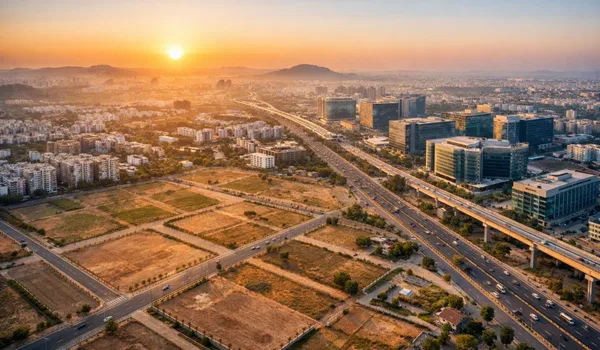
Over the past few years, Hyderabad has quietly become one of the destinations that Non-Resident Indians return to when they think about deploying money back home. The pull is not sentiment alone — it is a combination of a resilient IT and pharma economy, a heavy pipeline of public infrastructure, comparatively reasonable pricing for premium homes, and a steady stream of national developers entering the city. For an NRI weighing options in 2026, understanding Godrej Brooklyn Avenue and its Kukatpally setting starts with understanding why Hyderabad itself has moved up the list. This page lays out the case honestly and data-led, with forward-looking figures flagged as estimates to verify.
A Growing Economy That Supports Housing Demand
Hyderabad ranks among India's fastest-growing property markets, and the reason is structural rather than speculative. The city anchors a large IT and ITeS workforce around HITEC City, Gachibowli and the Financial District, while its pharma and life-sciences cluster — among the largest in the country — adds a second, more recession-resistant pillar of employment. Two strong job engines mean two streams of housing demand: salaried professionals seeking to buy, and a constant tenant base seeking to rent. For NRIs, that translates into the two outcomes they usually want from Indian property — capital appreciation and dependable rental income. Compared with Mumbai, Delhi-NCR, premium stock in Hyderabad still tends to be relatively affordable on a per-square-foot basis, which lets an NRI buy a larger, better-specified home for the same outlay.
Infrastructure Is the Real Story
Infrastructure is where Hyderabad's 2026 narrative gets concrete. The Metro Phase 2 expansion — roughly 76.4 km at an outlay near Rs 24,269 crore, targeted for completion around 2027 — extends rapid transit deep into the western and outer corridors that house the bulk of the IT workforce. In parallel, the Regional Ring Road (RRR), with completion broadly expected around 2026, will loosen the city's outer-belt congestion and open up new growth nodes. Industry analysis has repeatedly shown that proximity to an operational metro station correlates with materially higher price appreciation, often in the 10–30% range over comparable non-metro micro-markets. Areas like KPHB and Kukatpally have been recording standout land deals as national developers move in — a clear signal of where institutional money sees the next leg of growth. These figures are stated as of 2026 and should be verified against the latest project status before you decide.
Why West Hyderabad and Kukatpally Stand Out
Within Hyderabad, west and north-west pockets like Kukatpally combine established social infrastructure with strong connectivity to the employment belt. Kukatpally sits close to the JNTU College Metro Station on the operational Red Line, putting daily commutes within reach of the city's biggest job centres. HITEC City and Gachibowli are roughly 10–14 km away, the Financial District is about 30 minutes via the Outer Ring Road, and Rajiv Gandhi International Airport (RGIA) is around 35 km out — important for NRIs who fly in and out. The table below summarises the connectivity that makes the micro-market attractive.
| Destination from Kukatpally | Approximate distance / time (verify as of 2026) |
| JNTU College Metro Station (Red Line) | Nearby — direct rapid-transit access |
| HITEC City & Gachibowli (IT belt) | ~10–14 km |
| Financial District (via ORR) | ~30 minutes |
| Rajiv Gandhi International Airport (RGIA) | ~35 km |
| Metro Phase 2 corridor (76.4 km, ~Rs 24,269 cr) | Target completion around 2027 |
Rental Demand, Yields and the Rupee Advantage
A large, mobile IT workforce keeps west Hyderabad's rental market tight, and that steady tenant demand supports healthy rental yields on well-located homes near the metro and tech corridors — one reason our note on rental yield in Kukatpally is worth reading before you buy. For NRIs there is a second, currency-level tailwind: when the rupee depreciates against the US dollar, pound or dirham, Indian property effectively becomes cheaper in foreign-currency terms, and the same overseas salary stretches further at the time of purchase. Add to that the practical ease of NRI home financing — Indian banks lend to NRIs and OCIs, and sale proceeds can later be repatriated within FEMA limits when the property is bought through inward remittance — and the path from foreign earnings to an Indian asset is well-trodden. Our companion NRI home loan guide covers the financing mechanics in detail.
Why Hyderabad Appeals to NRIs — Drivers and Benefits
| Driver | What it means for an NRI buyer |
| Fast-growing market | Among India's quickest-appreciating cities, backed by real demand rather than speculation |
| IT/ITeS + pharma economy | Two job engines mean resilient buyer and tenant demand |
| Relative affordability | Premium homes priced lower per sq ft than Mumbai, Delhi-NCR or other metros |
| Metro Phase 2 & RRR | Connectivity upgrades historically linked to 10–30% higher appreciation near metro |
| Strong rental demand | Mobile IT workforce supports occupancy and yields |
| Rupee value | Currency depreciation makes Indian property cheaper in USD/GBP/AED terms |
| NRI-friendly financing | Home loans, FEMA-compliant purchase and repatriation when bought via remittance |
| Trusted developers | National brands like Godrej Properties reduce execution and title risk |
FEMA Eligibility — Who Can Actually Buy
The legal footing for NRIs is straightforward. Under the Foreign Exchange Management Act (FEMA), Non-Resident Indians and Overseas Citizens of India (OCIs) are permitted to purchase residential (and commercial) property in India — the only general exclusions are agricultural land, plantations and farmhouses. Purchase consideration must move through proper banking channels, typically inward remittance or funds held in NRE/NRO/FCNR accounts, and these clean records matter later for repatriation of sale proceeds. Because foreign-exchange and tax rules are revised periodically, you should always verify the current RBI and FEMA provisions — and your own residency status — with your bank or adviser before committing. For a step-by-step walkthrough, see our NRI guide to buying property in Hyderabad.
The Godrej Factor at Kukatpally
Brand trust matters enormously when you are buying remotely from abroad, and this is where Godrej Properties carries weight. Godrej Brooklyn Avenue is a boutique, low-density new launch in Kukatpally — spread across about 7.76 acres with roughly 70% open space, around 1,428 units, and a mix of 3 and 4 BHK homes. Pricing sits in the Rs 2.10–4.40 Cr band, with possession targeted for June 2031, and the project is RERA-registered under P02200010981. For an NRI, a credentialed developer, a clear RERA registration and a generous open-to-built ratio reduce the two risks that worry overseas buyers most: execution and title. If you are weighing micro-markets across the city, our broader view on the best areas to invest in Hyderabad in 2026 helps place Kukatpally in context.
Who Should Consider It — End-User vs Investor
Hyderabad suits two distinct NRI profiles. The end-user — someone who plans to return, retire here, or keep a home for visits — benefits from a well-connected, low-density address with strong social infrastructure, where a 4 BHK delivers space that would cost far more in other metros. The pure investor leans on the same fundamentals from a different angle: steady rental income from the IT tenant base, plus capital appreciation driven by Metro Phase 2 and the RRR maturing over the coming years. Either way, treat the forward figures here as 2026 estimates to verify, line up financing and FEMA compliance early, and choose a RERA-registered project from a developer with a delivery track record. On all three counts, a Godrej launch in Kukatpally is a rational starting point for an NRI building exposure to one of India's most dynamic property markets.
Frequently Asked Questions
1. Why are NRIs investing in Hyderabad real estate in 2026?
NRIs are drawn to Hyderabad because it is one of India's fastest-growing property markets, backed by a strong IT/ITeS and pharma economy, comparatively affordable premium housing, and major infrastructure such as Metro Phase 2 and the Regional Ring Road. Steady rental demand and a favourable rupee exchange rate add to the appeal. These drivers are described as of 2026 — verify current data before deciding.
2. Can an NRI legally buy property in Hyderabad?
Yes. Under FEMA, Non-Resident Indians and OCI cardholders may freely buy residential and commercial property in India, excluding only agricultural land, plantations and farmhouses. Payment must flow through banking channels such as inward remittance or NRE/NRO/FCNR accounts. Always verify the current RBI and FEMA rules and your residency status with your bank or adviser before purchase.
3. How does infrastructure affect Hyderabad property prices?
Infrastructure is a major price driver. Metro Phase 2 (about 76.4 km, ~Rs 24,269 crore, targeted around 2027) and the Regional Ring Road (completion broadly expected around 2026) improve connectivity, and homes near operational metro stations have historically appreciated 10–30% more than comparable non-metro locations. These are 2026 estimates and should be checked against the latest project status.
4. Why is Kukatpally a good area for NRI investment?
Kukatpally combines established social infrastructure with strong connectivity. It is close to the JNTU College Metro Station on the Red Line, around 10–14 km from HITEC City and Gachibowli, roughly 30 minutes from the Financial District via the ORR, and about 35 km from RGIA airport. That mix supports both rental demand and appreciation, which suits NRI end-users and investors alike.
5. Can an NRI repatriate the proceeds after selling Hyderabad property?
Generally yes, within FEMA limits. When property is purchased through inward remittance or NRE-account funds, sale proceeds can typically be repatriated up to the amount originally remitted plus applicable gains, after taxes and TDS. Keeping clean banking records of the purchase is essential. Repatriation rules are specific and change over time, so confirm the current RBI/FEMA limits with your bank.
6. Is Godrej Brooklyn Avenue suitable for NRI buyers?
It fits the profile many NRIs look for. Godrej Brooklyn Avenue is a low-density Kukatpally launch by Godrej Properties — about 7.76 acres, roughly 70% open space, around 1,428 units of 3 and 4 BHK homes, priced Rs 2.10–4.40 Cr, with possession targeted for June 2031 and RERA registration P02200010981. A trusted developer and clear RERA status reduce the execution and title risks that concern overseas buyers.
Godrej Brooklyn Avenue Blog