Hyderabad vs Pune for Property Investment
Published On: 25 June 2026

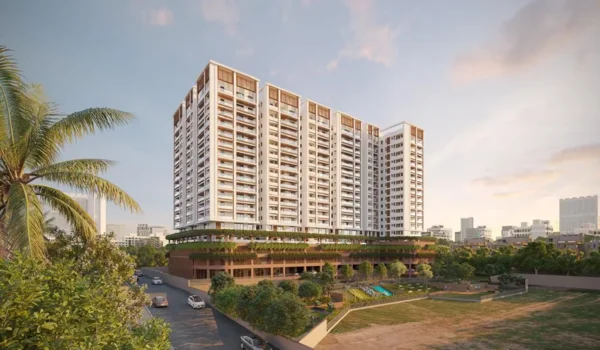
Hyderabad and Pune are two of India's most-watched property markets, and a buyer weighing one against the other is rarely choosing between a good city and a bad one — both are genuinely strong. They simply suit different priorities. Pune has decades of manufacturing and IT depth, a mature rental market and proximity to Mumbai. Hyderabad has lower entry prices for the space you get, an IT and pharma engine that is still expanding, and infrastructure projects that are widening its catchment. This page sets out a fair, factual comparison across the metrics that actually move an investment decision, and then explains who each city suits. Where a project lens helps, we use Godrej Brooklyn Avenue in Kukatpally as a worked Hyderabad example.
Hyderabad vs Pune — Side-by-Side Snapshot
The table below summarises the main investment dimensions. All figures are broad market ranges as of 2026 and should be verified against current listings and registration data before you commit, because micro-markets within each city vary widely.
| Dimension | Hyderabad | Pune |
| Typical mid-premium rate (per sq.ft) | ~Rs 8,000-19,000 depending on corridor | ~Rs 9,000-18,000 depending on corridor |
| Space per rupee | Generally larger built-up area for the budget | Tighter layouts in core IT corridors |
| Gross rental yield | ~3.5%-5.5% in strong catchments | ~3%-4.5% in mature IT belts |
| Demand engine | IT/ITeS, pharma, Financial District, Pharma City | IT, auto/manufacturing, education, Mumbai spillover |
| Infrastructure momentum | Metro Phase 2 (76.4 km, target ~2027), Regional Ring Road (~2026) | Metro expansion, ring road and highway upgrades |
| Water and master-planning | Generally wide roads, planned IT corridors | Strong in newer townships; older areas denser |
| Proximity to a larger metro | Stand-alone metro economy | ~3 hrs from Mumbai (an advantage and a price anchor) |
| Best fit | Space-and-yield buyers, long-horizon appreciation | Mumbai-linked buyers, established rental demand |
Entry Price and Value for Money
For the same budget, Hyderabad has historically handed buyers more carpet area and wider open spaces, partly because land in its growth corridors was released in larger, master-planned parcels. Pune's most sought-after IT belts — Hinjewadi, Baner, Kharadi — command premiums that rival Hyderabad's best addresses, but the layouts tend to be more compact. A buyer comparing a 3 BHK in each city will often find the Hyderabad unit larger for a similar ticket. As a concrete Hyderabad reference, Godrej Brooklyn Avenue offers 3 and 4 BHK homes from 1,588 to 3,261 sq.ft priced between Rs 2.10 Cr and Rs 4.40 Cr, at a base rate of Rs 12,500/sq.ft — useful as a yardstick when you line it up against Pune inventory of comparable positioning.
Rental Yield and Tenant Demand
Pune's rental market is deep and time-tested; its IT and student populations keep occupancy high and voids short, which is reassuring for a first-time landlord. Hyderabad's yields in strong metro-anchored catchments such as Kukatpally are competitive and, in some boutique segments, slightly ahead, supported by a steady inflow of IT professionals working in HITEC City, Gachibowli and the Financial District. If your priority is predictable, low-friction tenancy today, Pune scores well. If you are willing to ride an expanding demand base for a stronger blended return, Hyderabad's metro-proximate stock is attractive. You can dig into the local numbers on our rental yield in Kukatpally guide.
Appreciation and Infrastructure
Appreciation follows infrastructure, and both cities have it. Pune benefits from highway and metro upgrades and its Mumbai linkage. Hyderabad is in an unusually active phase: Metro Phase 2 spans 76.4 km at a sanctioned Rs 24,269 crore with a target of around 2027, the Regional Ring Road is slated for completion near 2026, and west-Hyderabad localities such as Kukatpally and KPHB are seeing record land deals as national developers enter. As of 2026, metro-proximity has been associated with roughly 10-30% higher appreciation versus non-connected pockets — please verify against current data. Hyderabad's broader story as one of India's fastest-growing markets is covered in our best areas to invest in Hyderabad guide.
Who Each City Suits
- Choose Pune if — you value a mature, liquid rental market, want proximity to Mumbai for work or family, or prefer a market with a long, proven track record of tenant demand.
- Choose Hyderabad if — you want more space for your budget, are investing on a 5-10 year horizon to capture metro and ring-road-driven appreciation, or want a metro-walkable, master-planned home in a low-density catchment like Kukatpally.
- Either works if — you are an end-user buying primarily to live; in that case schools, hospitals and commute should outweigh fine differences in yield. A look at Kukatpally real estate in 2026 helps frame the Hyderabad option.
A Practical Way to Decide
Shortlist two or three specific micro-markets in each city rather than comparing the cities as a whole, because a great Pune address can beat an average Hyderabad one and vice versa. Pull recent registered transaction rates, not asking prices. Model your net yield after maintenance, property tax and vacancy. Then weigh the infrastructure pipeline against your holding period. For most space-and-appreciation-led investors with a multi-year horizon, Hyderabad's current momentum makes a compelling case; for those anchored to Mumbai or wanting today's deepest rental pool, Pune holds its own.
Frequently Asked Questions about Hyderabad vs Pune
1. Is Hyderabad or Pune better for property investment in 2026?
Both are strong. Hyderabad generally offers more space for the budget and is in an active infrastructure phase (Metro Phase 2, Regional Ring Road), which supports appreciation on a 5-10 year horizon. Pune offers a mature rental market and Mumbai proximity. Space-and-appreciation investors often lean Hyderabad; buyers wanting today's deepest rental pool or a Mumbai link often lean Pune. Verify current rates and yields before deciding.
2. Which city gives better rental yield?
As of 2026, Hyderabad's metro-anchored catchments such as Kukatpally see gross yields of roughly 3.5%-5.5%, while Pune's mature IT belts run around 3%-4.5%. Pune's rental demand is deeper and more proven; Hyderabad's is expanding with the IT and pharma base. Always compute net yield after maintenance, tax and vacancy, and verify against live listings.
3. Is property cheaper in Hyderabad than Pune?
It depends on the corridor, but for a similar budget Hyderabad has historically delivered larger built-up area because its growth corridors were released as wide, master-planned parcels. Pune's top IT belts command premiums comparable to Hyderabad's best addresses with tighter layouts. Compare specific micro-markets and registered rates rather than city averages.
4. What infrastructure is driving Hyderabad appreciation?
Hyderabad Metro Phase 2 (76.4 km, sanctioned around Rs 24,269 crore, target roughly 2027) and the Regional Ring Road (completion near 2026) are the headline projects, alongside record land deals in west-Hyderabad localities like Kukatpally and KPHB. As of 2026, metro-proximity has been linked with around 10-30% higher appreciation versus non-connected pockets — verify against current data.
5. Is Kukatpally a good Hyderabad option to compare against Pune?
Yes. Kukatpally is a metro-walkable, low-density catchment in west Hyderabad with strong schools, hospitals and Outer Ring Road access to the Financial District. A new-launch reference is Godrej Brooklyn Avenue, with 3 and 4 BHK homes of 1,588-3,261 sq.ft priced from Rs 2.10 Cr, which makes a fair yardstick against comparably positioned Pune inventory.
Godrej Brooklyn Avenue Blog