Vastu Tips for Buying a Flat — Facing, Floor & Layout
Published On: 25 June 2026
Vastu Shastra is a traditional Indian framework for orienting a home so that natural light, ventilation and the flow of daily life all work in your favour. Stripped of superstition, much of it is simply good design — placing the kitchen where morning sun helps, the master bedroom where it stays calm, and the entrance where it feels welcoming. For many buyers in Hyderabad, a vastu-friendly flat also resells more easily, because a large share of the market still asks about facing and entrance direction. This guide gives you a practical, balanced checklist for buying a flat — facing, main entrance, room placement and floor choice — and shows how to apply it sensibly when selecting a unit at Godrej Brooklyn Avenue in Kukatpally. Treat these as preferences to weigh, not absolutes — the right home is one that suits your family first.
Best Facing — East and North Lead
In vastu, east and north facing are the most sought-after, with north-east considered the best of all. The logic is sound: an east-facing home catches gentle morning light, and north light stays even through the day without harsh afternoon heat. South-facing units are traditionally avoided because they take the strongest afternoon sun, though in practice good design, balconies and modern glazing can manage this well. When you shortlist a unit at Godrej Brooklyn Avenue, ask the sales team for the facing of the specific flat and how the two G+45 towers are oriented on the 7.76-acre campus, so you can match a vastu-preferred facing to a view and floor you like.
| Facing | Vastu view | Practical reality |
| North-east | Most auspicious | Balanced light, cooler interiors |
| East | Highly preferred | Bright mornings, good for early routines |
| North | Preferred | Even daylight, low heat gain |
| West | Acceptable | Warm evenings; manageable with shading |
| South | Traditionally avoided | Strongest afternoon sun; good design can mitigate |
The Main Entrance
The main door is treated as the mouth through which energy enters the home, so vastu places strong emphasis on it. East and north-east are the preferred directions for the main entrance, as they are associated with positivity and prosperity. In a flat, you do not always control which way the corridor and door face, so the practical move is to confirm the entrance direction of the unit before booking and, where it is less ideal, use light, clutter-free thresholds and good lighting to keep the entry bright and welcoming. A clean, well-lit entrance does as much for the feel of a home as its compass direction.
Room Placement Inside the Flat
Once inside, vastu guides where each function ideally sits. These align neatly with practical comfort, which is why they have endured.
- Master bedroom in the south-west — considered the most stable corner; in practice it stays quieter and gets less harsh morning light, helping rest
- Kitchen in the south-east — the traditional fire corner; it also catches morning sun, which keeps the kitchen bright and dry
- Living and common areas toward the north/east — the brighter zones, ideal for spaces where the family gathers
- Pooja or quiet room in the north-east — the calmest, lightest corner of the home
- Bathrooms and utilities toward the west/north-west — kept away from the main living and sleeping zones
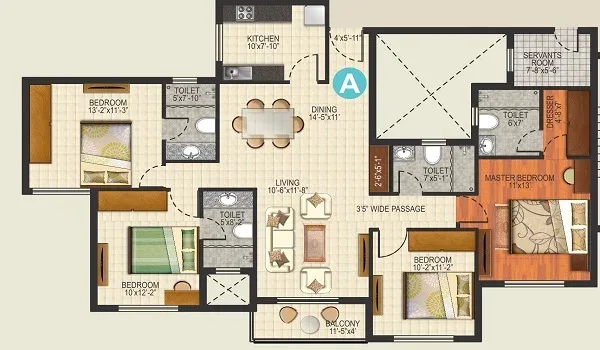
Because Godrej Brooklyn Avenue offers both 3 BHK and 4 BHK layouts, you can compare how each plan places the kitchen, master bedroom and living area relative to the facing of the unit. Studying the Godrej Brooklyn Avenue floor plans with a vastu lens helps you pick a unit where the preferred placements already line up, rather than trying to force changes later.
Choosing the Right Floor
Vastu is less prescriptive about floor number, but mid floors — roughly the 3rd to 7th — are often recommended as a balance of light, ventilation and protection from ground-level dust and noise. In a tall G+45 tower, the practical considerations matter just as much: lower-mid floors are quicker to access and feel more connected to the campus greenery, while higher floors offer longer views and breeze but depend more on lifts. Match the floor to how you live — families with young children or older parents often prefer accessible mid floors, while buyers who prize views and quiet lean higher. There is no single "correct" floor; pick the one that fits your routine and budget.
Keeping Vastu in Perspective
Vastu is best used as one input among several, not the deciding factor. Light, ventilation, a sensible layout and a comfortable entrance deliver most of the real benefit, and they overlap heavily with what vastu recommends. Resale is a fair reason to value facing and entrance direction, since many buyers ask about them, but do not pass up an excellent home over a single non-ideal element that good design already handles. Pair these vastu pointers with the hard fundamentals — the RERA-approved title (Telangana RERA No. P02200010981), the metro-anchored Kukatpally location, and the configuration that fits your family — and you will choose a flat that feels right and holds value. For the financial side of the decision, see the Godrej Brooklyn Avenue cost sheet.
Frequently Asked Questions about Vastu for Buying a Flat
1. Which facing is best for a flat as per vastu?
East and north facing are the most preferred, with north-east considered the best overall. East-facing homes get gentle morning light, while north light stays even and cool through the day. South-facing units are traditionally avoided because of strong afternoon sun, though good design and shading can manage this. When choosing at Godrej Brooklyn Avenue, ask for the facing of the specific unit and how the towers are oriented on the campus.
2. Where should the main entrance face?
Vastu prefers the main entrance to face east or north-east, directions associated with positivity. In an apartment you cannot always control the door direction, so confirm the entrance facing of the unit before booking. Where it is less than ideal, keep the entry clutter-free and well-lit — a clean, bright threshold does as much for the feel of a home as the exact compass direction.
3. Where should the kitchen and master bedroom be placed?
Vastu places the kitchen in the south-east — the traditional fire corner, which also catches morning sun and stays bright and dry — and the master bedroom in the south-west, the most stable corner, which tends to be quieter with softer light for rest. Living and common areas suit the brighter north and east zones. Comparing the 3 BHK and 4 BHK floor plans helps you find a unit where these placements already line up.
4. Which floor is best as per vastu in a high-rise?
Vastu is not strict about floor number, but mid floors — roughly the 3rd to 7th — are often suggested as a balance of light, ventilation and distance from ground-level dust and noise. In a tall G+45 tower, practical factors matter too: accessible mid floors suit families with children or older parents, while higher floors offer longer views and breeze but rely more on lifts. Pick the floor that fits your routine and budget.
5. How important is vastu when buying a flat?
Treat vastu as one input among several, not the deciding factor. Much of its value overlaps with good design — light, ventilation, a sensible layout and a welcoming entrance. Facing and entrance direction can help resale, since many buyers ask about them, but do not reject an excellent home over a single non-ideal element that design already handles. Weigh vastu alongside the RERA approval, the location and the right configuration for your family.
Godrej Brooklyn Avenue Blog